Brain Map
Every numbered marker maps a real brain mechanism to its NCA implementation. Hover over a marker for details.
Medial Sagittal Section — numbers reference table rows below
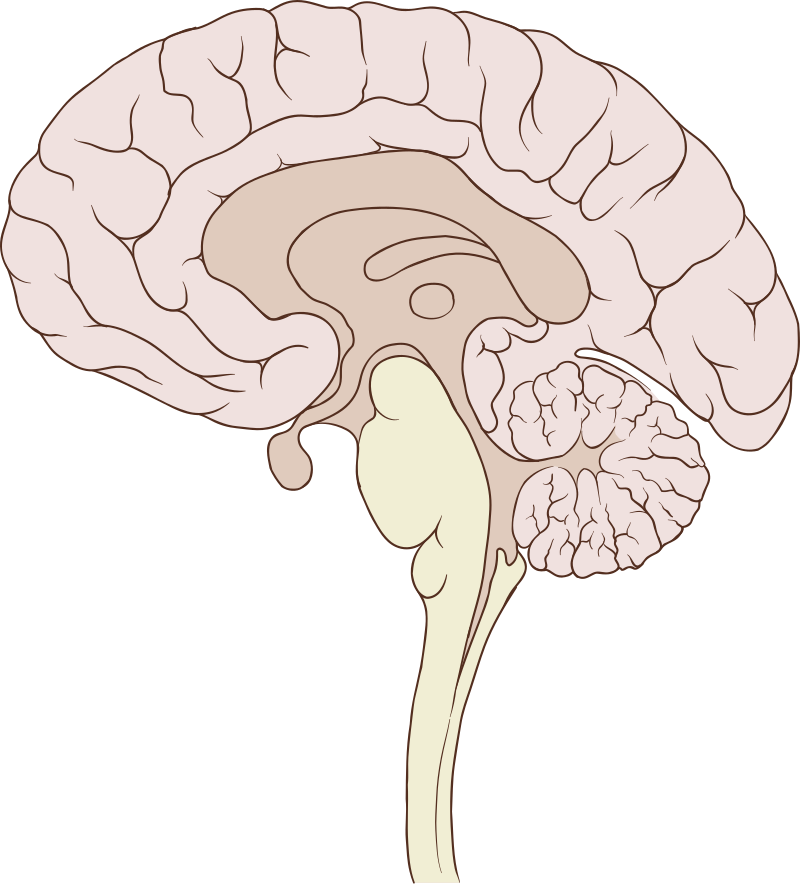 Prefrontal
Cortex Thalamus Basal
Ganglia Amygdala Hippocampus Entorhinal VTA Angular
Gyrus Cerebellum Brainstem Cortical Oscillations (distributed)
1
2
3
4
5
6
7
8
9
10
11
12
13
14
15
16
17
18
19
20
21
22
23
24
25
26
27
28
29
30
31
32
33
34
35
36
n
Implementedn
Planned
Brain illustration: Patrick J. Lynch & C. Carl Jaffe, Yale School of Medicine —
CC BY 2.5
| # | Brain Region / Mechanism | How It Affects Humans | Neuroscience Function | NCA Layer | When It Fires | Example | Phase |
|---|---|---|---|---|---|---|---|
| Sensory Gating & Perception | |||||||
| 1 | Thalamus | Filters sensory overload so you focus on what matters | Sensory gating & filtering | Perception | Every turn — first step of cognitive loop | “Tell me about Portugal” → intent: question, entities: [Portugal], urgency: 0.7 | 1 |
| 2 | Thalamic reticular nucleus | Ignore background noise while reading | Attentional gating of working memory | Conscious | Context block exceeds token budget | 12 memories + 5 cues exceed budget → lowest-scoring memories pruned; cues protected | 2 |
| Emotional Processing | |||||||
| 3 | Amygdala | You flinch before you think — gut-level alarm | Emotional salience detection | Perception | Every turn — NRC lexicon scan | “I’m terrified about the diagnosis” → intensity 0.82 (fear + anticipation dominant) | 3 |
| 4 | Amygdala → Spotlight | In crisis you recall vivid emotions, forget peripherals | Emotional hijack of retrieval | Memory | emotional_intensity > 0.7 | Intense grief → Spotlight mode: 5 emotionally-similar memories, no spreading activation | 3 |
| 5 | Amygdala → Anticipatory suppression | When flooded emotionally you stop planning ahead | Emotional focus inhibits prediction | Subconscious | retrieval_hint = “spotlight” | Emotional crisis → anticipatory submind gets −0.5 suppression, stops pre-fetching | 3 |
| 6 | NRC Word-Emotion Lexicon | “Home” feels different than “domicile” | Plutchik 8 emotions + 2 sentiments | Subconscious | Emotional coherence submind fires (intensity > 0.3) | “I’m so proud of Lily” → joy 0.7, trust 0.5 → two-channel blend with Haiku analysis | 3 |
| Memory Encoding & Retrieval | |||||||
| 7 | Hippocampus (DG/CA3) | A smell triggers a childhood memory | Pattern completion retrieval | Memory | Every turn — after perception | “What was that restaurant?” → vector search finds Cantinho do Avillez from 80 memories | 1 |
| 8 | CA3 recurrent collaterals | Friend → their partner → the restaurant you all visited | Spreading activation (2-hop) | Memory | Entities found in initial retrieval (capped at 20) | “Elena” in memory → hop 1: “Portugal trip” → hop 2: “Maria’s wedding” | 2 |
| 9 | Hippocampal unified encoding | You remember what, when, where, and how it felt | Bind temporal + contextual + experiential + associative | Memory | After every agent response | Career anxiety talk → stored with timestamp, entities [Marcus, Dev], valence −0.3 | 1 |
| 10 | Hippocampal replay | Sleep replays the day, strengthening what matters | Theme extraction via replay to neocortex | Subconscious | Consolidation submind fires (depth ≥ 3, info load accumulates) | 5 turns about career → “Theme: tension between IC identity and leadership aspiration” | 3 |
| 11 | NTAS temporal decay | Forget last Tuesday’s lunch, remember your wedding | Salience decay + reconsolidation boost | Memory | During retrieval scoring | 3-month-old memory (salience 0.6) decays to 0.41; re-accessed memory gets 1.15× boost | 1 |
| 12 | Cortical oscillations | Alert focus retrieves differently than drowsy free-association | Brain wave state-dependent retrieval | Memory | Brain wave mode selected by time gap + intent | Quick follow-up → Gamma (7 memories); “trace the arc” → Delta (12 memories, wide spread) | 1–3 |
| 13 | Entorhinal cortex | You know a phone number without reliving the day you learned it | Entity property binding | Memory | Perceived entities have graph nodes — fires during retrieval | “How’s Elena?” → graph returns: lives in Lisbon, works at CERN, married to Miguel | 2 |
| 14 | Entorhinal → Context | Hearing “Elena” instantly surfaces her key attributes | Entity facts surfacing | Conscious | Entity facts exist in graph — injected into context block | Elena mentioned → context block gets “Elena: physicist, Lisbon, partner: Miguel” as working memory | 2 |
| Cognitive Control & Gating | |||||||
| 15 | Basal ganglia (GPi/SNr) | Brain doesn’t analyze grammar when someone says “hello” | Tonic inhibition of subminds | Subconscious | Every turn — gate evaluates all subminds before firing | “Hey Koda” → only metacognition fires; deductive, graph, anticipatory all inhibited | 4 |
| 16 | Striatal MSNs | Several clues accumulate into a sudden realization | Multi-input integration → graded disinhibition | Subconscious | Multiple signals combine — entities + complexity + emotion accumulate activation | “Compare Elena’s career to mine” → entity (0.3) + question (0.25) + complexity (0.2) = 0.75 > threshold | 4 |
| 17 | VTA → D1 dopamine | Curiosity and surprise make you more mentally flexible | Arousal lowers firing threshold | Subconscious | Emotional intensity > 0.5 or novel entities detected | Surprise question about forgotten topic → arousal 0.7 lowers thresholds by 0.15, more subminds activate | 4 |
| 18 | VTA → mPFC dopamine | “Connect the dots” activates narrative-building circuits | Circuit-specific consolidation facilitation | Subconscious | Synthesis request or high-complexity with person schema present | “How has my thinking on career changed?” → consolidation submind gets +0.3 boost, fires earlier | 5 |
| Consolidation & Schema Formation | |||||||
| 19 | Systems consolidation | Over weeks, isolated experiences become “my year abroad” | Hippocampal → neocortical cascade | Memory | Session ends or narrative arc threshold reached | 8-turn career chat → session summary → arc: “Growing tension between IC work and leadership” → schema update | 5 |
| 20 | mPFC schema formation | You carry a mental model of close friends | Person mental model (McClelland 1995) | Memory | Enough narrative arcs accumulate (≥3) or bootstrap from rich initial history | After 5 sessions → person schema: “values autonomy, anxious about leadership, close to Elena and Lily” | 5 |
| 21 | mPFC → Context block | Your mental model of someone shapes every interaction | Schema injection into working memory | Conscious | Person schema exists — injected into every context block | Schema “values deep work, anxious about promotion” appears in Opus context → shapes tone and advice | 5 |
| 22 | vmPFC schema-driven cognition | You reason from your model of a friend, not by replaying every talk | Reason from mental model, not from scratch | Conscious | Schema present + many memories retrieved → density dial shifts to schema-lean | Schema covers career context → density: “lean on schema, prioritize recent episodes” → fewer memories needed | 5 |
| Executive & Higher-Order Cognition | |||||||
| 23 | Prefrontal cortex (dlPFC) | “Wait, that doesn’t follow” — you catch logical gaps | Logical structure analysis | Subconscious | Gate activation > threshold for deductive submind (question or high complexity) | “Why did the project fail?” → deductive submind cue: “causal chain: timeline pressure + scope creep + no escalation” | 1 |
| 24 | Prefrontal metacognition | You know when you’re confused — thinking about thinking | Reasoning quality monitoring | Subconscious | Always — bypasses basal ganglia gate entirely | Low-confidence question → metacognition cue: “complexity: high, confidence: 0.4, suggest clarification” | 1 |
| 25 | Prefrontal cortex (executive) | The inner voice that deliberates and forms a considered response | Deliberate conscious reasoning | Conscious | Every turn — after all subconscious cues and memories assembled | Opus receives context block with 8 memories + 3 cues + schema → produces structured cognition with speech | 1 |
| 26 | Working memory capacity | Juggle ~4 things; more than that and you drop details | Cowan’s ~4-item limit | Conscious | Context block assembly — proportional token budgets enforced | 150k token budget: memories get 60%, cues 25%, schema 15% → overflow items pruned by relevance | 3 |
| 27 | Predictive coding | Walking into a kitchen you pre-activate “stove, fridge, sink” | Proactive pre-fetch of associations | Subconscious | Conversation depth ≥ 2, not in Spotlight mode | 3rd turn about Portugal trip → anticipatory cue pre-fetches: “likely topics: food, Elena, Lisbon weather” | 2 |
| 28 | Medial temporal lobe network | You navigate who knows whom, who’s connected to what | Entity relationship traversal | Subconscious | Entities detected in perception (entity count > 0) | “Tell me about Elena and Miguel” → graph traversal: Elena—PARTNER→Miguel, Elena—WORKS_AT→CERN | 1 |
| 29 | Angular gyrus semantic priming | “How’s the restaurant search?” — you know they mean Belcanto | Implicit entity detection | Memory | No explicit entities in input, but recent context contains relevant ones | “Any updates?” after discussing Lisbon → resolves implicit entities: [Lisbon, Belcanto, Elena] | 5.2 |
| Homeostatic Regulation | |||||||
| 30 | Adenosine sleep pressure | The longer you’re awake and learning, the more you need to sleep | Information-load consolidation trigger | Subconscious | Cumulative info load exceeds threshold during conversation | 10 dense turns → info_load 8.5 → consolidation submind gets +0.4 boost, triggers mid-session summary | 6a |
| Cerebellar Prediction & Calibration | |||||||
| 31 | Cerebellar forward model | You know the cup is heavier than expected before you think about it | Haiku evaluates context quality before Opus fires; re-retrieves or trims memories if confidence < 0.6 | Subconscious | Before Opus fires — Haiku evaluates assembled context quality | Context has 3 memories but low relevance → confidence 0.4 < 0.6 threshold → re-retrieves with broader query | 7.0 |
| 32 | Climbing fiber error learning | Missing three free throws in a row changes how you shoot the fourth | Error-driven tonic calibration — gate learns which subminds matter per user | Subconscious | After each turn — compares predicted vs actual response quality | Emotional submind predicted “high need” but user wanted facts → error signal adjusts tonic level −0.05 | 7.1 |
| 33 | Prediction error accumulation | “I keep misjudging her” triggers revising your mental model | EMA error tracking — 3+ consecutive mismatches trigger schema reconsolidation | Memory | EMA error > staleness threshold for 3+ consecutive turns | Schema says “anxious about leadership” but user is now excited → 3 mismatches → triggers schema rebuild | 7.2 |
| 34 | Cerebellar temporal sequencing | You know when to pause, when to be brief, when to elaborate | Response pacing & fluency prediction | Conscious | Every turn — analyzes message length ratio, emotion trajectory, topic continuity | User sends 5-word follow-up after long message → brief-warm register, ~50 words target | 7.3 |
| Planned | |||||||
| 35 | dlPFC relational processing | Comparisons and conditionals demand more cognitive effort | Deductive relational complexity modulation | Subconscious | Planned — compare/contrast or multi-conditional detected | “How does X compare to Y given Z?” → deductive submind gets extended context window | 6 |
| 36 | Dentate gyrus pattern separation | You distinguish similar but different memories (today’s parking spot vs yesterday’s) | Scaling benchmark validation | Memory | Planned — near-duplicate memories detected at retrieval time | Two lunch meetings at same café → separator distinguishes Feb vs March event by context | 6 |
Perception
Conscious (Opus 4.6)
Subconscious (Haiku 4.5)
Memory (ChromaDB + Neo4j)
N Implemented
N Planned